
Energy Efficient & ICF Home Construction Olathe KS
In Olathe, KS, homes near the Blackbob Road corridor sit on Johnson County's most expansive clay soils. That soil is the number one reason standard wood-frame builds underperform on energy efficiency. If you have already researched ICF and are ready to find a builder, this page is for you. Most builders with open capacity can begin permitting within 4–8 weeks. ICF and energy-efficient construction is a specialty service within our [Custom Home Building Olathe KS] practice.
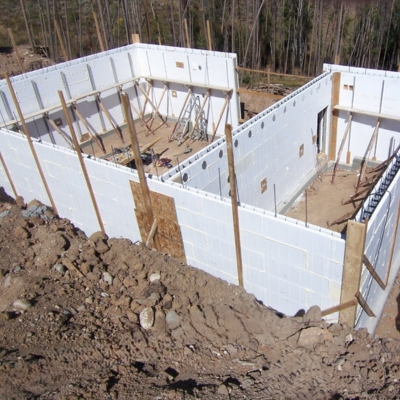
ICF Home Construction Process in Olathe KS
A typical ICF home in Olathe runs 7–12 months from permit application to certificate of occupancy. The process starts with a soil report, a boundary survey, and a pre-application meeting with Johnson County Building Safety. ICF-specific structural drawings and energy compliance calculations are submitted during the design and permit phase. Johnson County adopted IECC 2021 in 2023, so your energy documentation must follow that path.
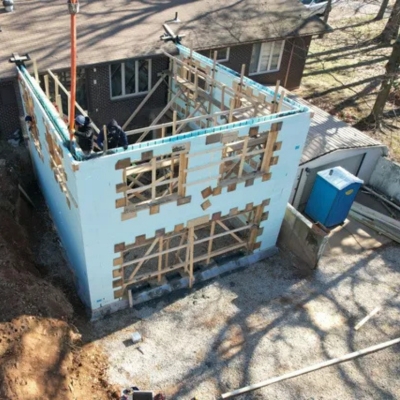
Foundation work begins with footer pours, ICF block stacking, and rebar placement. Johnson County enforces IRC wind Exposure Category B at 115 mph ultimate design wind speed - your rebar schedule must reflect that. After the concrete pour inside the ICF forms, rough-in mechanical, electrical, and plumbing work follows. No additional batt insulation is needed. ICF delivers continuous R-value throughout the entire wall assembly.
Olathe averages roughly 38 freeze-thaw cycles per year. That affects concrete cure scheduling on any standard build. ICF's thermal mass buffers temperature swings during the cure window and reduces weather-related delays. Once all inspections pass, Johnson County Building Safety issues the certificate of occupancy. Builders with open capacity can typically begin the design and permit phase within 4–8 weeks of a signed contract.
When to Choose ICF Home Construction in Olathe KS
Your lot is a strong ICF candidate if it sits on expansive clay soil. West Olathe neighborhoods near Ridgeview Road and the 159th Street corridor are among the highest-risk areas for soil movement in Johnson County. ICF continuous footers resist differential movement far better than standard wood-frame footings. Johnson County also sits in FEMA Wind Zone II - that alone makes ICF worth serious consideration.
Noise is another strong signal. If your lot borders K-7 Highway, I-35, or the 119th Street commercial strip, ICF reduces outdoor-to-indoor sound transmission by 30–50%. Homeowners with utility bills above $300 per month in a comparably sized stick-built home are also good candidates. ICF's payback window in Olathe typically lands at 5–7 years - making long-term ownership intent the most important qualifying factor.
ICF is not the right fit for every project. A tight budget with no room for a 5–15% construction premium is a clear signal to reconsider. A short ownership horizon under five years rarely allows enough time to recover that cost. ICF also outperforms spray-foam stick-built construction on storm resilience and durability. Spray foam only addresses air sealing on a wood frame - ICF provides a monolithic concrete shell. Johnson County's Verdigris and Woodson clay soils rank among the most expansive in eastern Kansas, per NRCS Web Soil Survey data.
Johnson County Regulations for ICF Home Construction in Olathe KS
All residential construction in Olathe falls under Johnson County Building Safety. There is no separate city permit department for new home construction. The same four permit categories apply to ICF and wood-frame builds: building, electrical, mechanical, and plumbing. No special ICF-specific permit fee exists - the standard new residential construction fee schedule applies.
ICF does require one additional document that wood-frame does not. You will need a stamped structural engineering letter confirming your wall design meets IRC Section R611. Energy compliance must follow the IECC 2021 path, which Johnson County adopted in 2023. A 6-inch ICF core wall inherently meets the required wall U-factor of 0.060 - stick-built construction requires added continuous rigid foam to reach that same threshold.
Expansive soil lots may trigger a geotechnical report requirement before Johnson County approves your footing permit. Confirm this during the pre-application meeting with Johnson County Building Safety. A reputable Olathe ICF builder will pull all permits, coordinate the engineer of record, and attend all required inspections on your behalf. Confirm that full permit management scope is explicitly written into your contract before you sign.
Choosing the Right ICF System for Olathe KS Weather and Soil
ICF core wall thickness matters in Johnson County. A 4-inch concrete core meets code minimum but is best suited for interior partition walls. A 6-inch core is the recommended baseline for exterior walls in Johnson County's wind zone. Lots near I-35, K-7, or exposed ridge lines call for an 8-inch core. Standard EPS foam facing of 2.5 inches per side delivers a total wall R-22 to R-26 - outperforming Kansas IECC minimum by 30-40%.
Olathe sits in Climate Zone 4A. Hot, humid summers and cold winters create large daily temperature swings. ICF's thermal mass flattens those swings and reduces HVAC cycling. That extends equipment life and lowers long-term mechanical replacement costs. DOE research shows ICF homes average 20-25% lower heating and cooling costs than comparable stick-built homes. In Olathe, the breakeven on the construction premium typically lands at 5–7 years.
ICF adds roughly $5-$15 per square foot to shell construction. That premium is offset by smaller HVAC equipment sizing, reduced air sealing labor, and lower lifetime utility spend. Olathe also averages 3-5 significant hail events per year according to NOAA Storm Events data. ICF's concrete exterior face is unaffected by hail. Standard vinyl siding on wood frame requires more frequent repair and replacement after those events.
Should I choose ICF construction or traditional wood-frame for an energy efficient home in Olathe, KS?
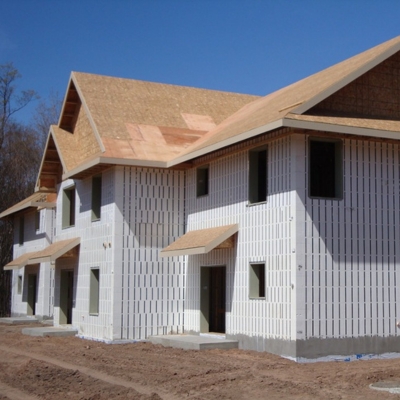
ICF stands for Insulated Concrete Forms - interlocking foam blocks stacked and filled with reinforced concrete. In Olathe, KS, ICF outperforms wood-frame on energy efficiency, storm resistance, and long-term cost of ownership. Johnson County's clay soils and FEMA Wind Zone II designation make ICF especially well-suited for new custom builds.
Energy: ICF walls reach R-22 to R-26 vs. R-13 to R-15 for standard 2x4 stick-built construction
Durability: Concrete core meets Johnson County's 115 mph ultimate wind design requirement with room to spare
Noise: ICF reduces outdoor-to-indoor sound transmission by 30-50% - ideal near K-7, I-35, or busy commercial corridors
Cost: 5-15% higher build cost offset by a typical 5-7 year payback through lower utility bills in Climate Zone 4A
Our Full Custom Home Building Olathe KS Services
Energy-efficient and ICF construction is one specialized service within a complete custom home building practice. It is not a standalone offering. A full custom home project requires lot evaluation, architectural design, general contracting, and specialty trade coordination. All of that is managed under one builder relationship. If you are ready to move beyond ICF research, visit our Custom Home Building page to see the full scope of services available.
ICF is the building method. Custom Home Building is the complete project delivery service. Clients who start with ICF research typically need full permitting, project management, and subcontractor coordination as well. Those are not separate engagements - they are part of a single build relationship from lot to certificate of occupancy.
Custom ICF builds are active today in Olathe's newer construction neighborhoods. Whisper Creek, the Mahaffie Farms corridor, and Prairie Center are all seeing custom energy-efficient homes go up. These neighborhoods sit on the same Johnson County clay soils that make ICF continuous footers a smart long-term foundation choice. If your lot is in or near one of these areas, a pre-application conversation with a full-service builder is a practical next step.
Energy Efficient & ICF Home Frequently Asked Questions
How long does it take to complete an ICF home construction project in Olathe, KS, and how soon can a builder get started?
Most ICF homes in Olathe take 7-12 months from permit application to certificate of occupancy. Permitting alone takes 4-6 weeks once a complete application is submitted to Johnson County Building Safety. A builder with open capacity can typically begin the design and permit phase within 4-8 weeks of a signed contract. Plan for 10-14 months from first call to move-in to avoid schedule pressure.
Does Johnson County require special building permits for ICF home construction in Olathe, KS compared to standard wood-frame builds?
No special ICF permit category exists - the same residential building permit applies to both build methods. ICF does require a stamped structural engineering letter confirming compliance with IRC Section R611. Energy documentation must follow the IECC 2021 path, which Johnson County adopted in 2023. No additional permit fees apply - the standard new residential construction fee schedule covers ICF builds.
How do Olathe's clay-heavy soils affect the foundation requirements for ICF home construction?
Johnson County's expansive clay soils require more robust footing design than sandy or loam soils. A geotechnical report may be required by Johnson County before footing permit approval on high-plasticity lots. ICF continuous footers and reinforced stem walls handle differential soil movement better than standard wood-frame footings. West Olathe neighborhoods near Ridgeview Road and 151st Street are particularly prone to high-plasticity clay - confirm with a soil report before finalizing your foundation design.
What wind load and severe weather ratings does ICF home construction in Olathe, KS need to meet?
Johnson County requires a 115 mph ultimate design wind speed under IRC Exposure Category B. A standard 6-inch ICF core wall with rebar meets that requirement with significant margin. Some ICF manufacturers certify wall assemblies to 200-250 mph - relevant for tornado-exposed lots in Johnson County. ICF's monolithic concrete construction eliminates the roof-to-wall connection vulnerabilities common in wood-frame storm failures.
Is energy efficient ICF home construction in Olathe, KS worth the higher upfront cost?
For most Olathe homeowners planning to stay 7 or more years, yes - utility savings typically outpace the premium within 5-7 years. ICF adds roughly $5-$15 per square foot to shell construction compared to standard stick-built. Lower HVAC equipment sizing, reduced air sealing labor, and 20-25% lower utility bills offset that premium over time. Johnson County's Climate Zone 4A - hot summers and cold winters - maximizes ICF's thermal mass benefit and speeds up payback compared to mild-climate states.
Do custom home builders in Olathe, KS who specialize in energy efficient construction also handle the full permit process with Johnson County?
Yes - full-service ICF builders in Olathe typically manage the entire Johnson County permit process on your behalf. This includes submitting the application, coordinating the structural engineer of record, and attending all required inspections. Confirm that permit management scope is explicitly included in your contract before signing. Ask specifically whether the builder attends the Johnson County pre-application meeting - that step alone can prevent costly design revisions later.
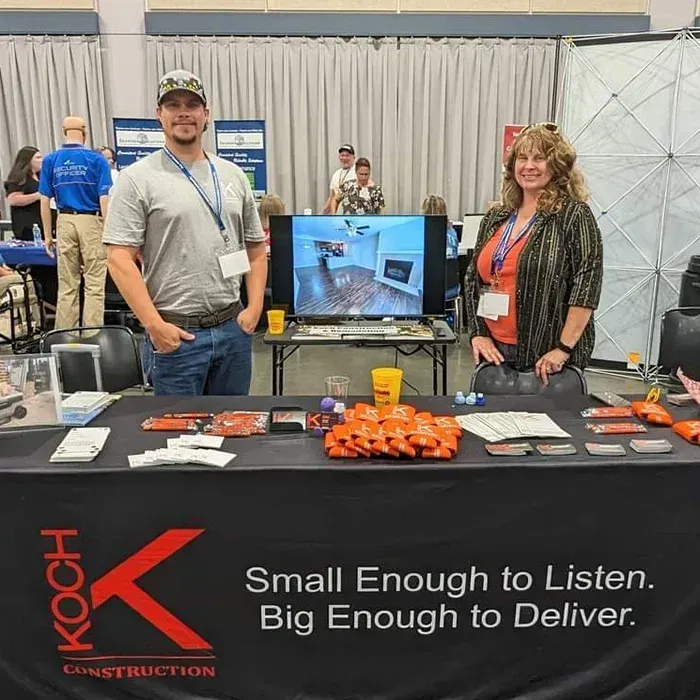
Call or contact Koch Construction & Remodeling now for a free estimate and quick, reliable service.
Small enough to listen, Big enough to deliver


Powered By Local Biz Domination