
Custom Deck Building Olathe KS
You are not here to gather more estimates. You are ready to hire a builder and get the job done right. Warped boards, failed inspections and a crew that vanishes after the deposit clears are real risks on any deck project. Koch Construction delivers a fixed scope, a pulled permit and a finished deck built to hold up through Johnson County seasons.
Koch Construction is based in Olathe, KS. Our crews reach project sites through the I-35 and I-435 interchange. That puts us within 20 minutes of most Olathe neighborhoods. You get a local crew that shows up on schedule and stays until the work is done.
Custom deck building is a core specialty within our Deck & Outdoor Living Olathe KS services. This page covers the specific technical process for deck projects in this city. From footing depth to permit approval, every step is explained here.
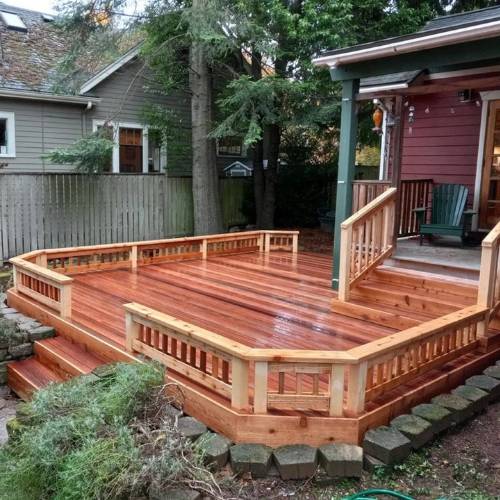
Custom Deck Building Professional Standards in Olathe KS
Choosing the right decking material affects your maintenance schedule for years. Pressure-treated lumber is a cost-efficient structural choice for framing members. Composite decking eliminates the seasonal sanding, sealing and board replacement that comes with wood exposed to Kansas City humidity and UV. We specify the right material for each part of the build before a single order is placed.
Every deck we build is engineered to carry a minimum live load of 40 PSF per IRC Table R507.5. That threshold supports outdoor furniture, full gatherings and complete occupancy without flex or failure. The ledger board attachment to your house is calculated to meet this standard - not estimated. Lag bolt spacing and pull-out values are specified before framing begins.
Joist spacing controls how a finished deck feels underfoot. Correct spacing prevents flex and board movement across the full deck surface. Joist hanger hardware is selected using species-specific bearing values per ICC ESR documentation. That means the hardware matches the actual decking material used - not a generic spec pulled from a national estimator. Every framing member is specified before material orders are placed. No on-site substitutions are made that affect structural performance. Every framing stage is built to pass City of Olathe Building Safety Division inspection on the first review.
Deck Post Anchoring and Footing Methods in Olathe KS
Johnson County frost maps require a minimum footing depth of 36 inches. Any footing poured above that depth sits in the active freeze zone. During late winter freeze-thaw cycles, those footings heave upward and shift post alignment. Once posts shift, boards gap and structural integrity is compromised across the entire deck frame.
Olathe sits on clay-heavy soil that behaves differently than sandy or loam soil types. That clay expands when it absorbs moisture and contracts during dry Kansas summers. That shrink-swell movement transfers load stress directly to post bases and footings. Under-engineered footings can crack within two seasons from this pressure alone. Professional anchoring uses concrete pier footings with hot-dip galvanized post base hardware. This system transfers structural load down to stable bearing soil below the active frost zone.
Post base selection is verified against the diameter and depth of each concrete pier. An undersized base creates rotation risk under lateral loads at full deck occupancy. Footing diameter is also sized to local soil bearing capacity - not a generic chart from a national deck estimator. Olathe's expansive clay requires site-specific sizing to prevent long-term settling and post movement.
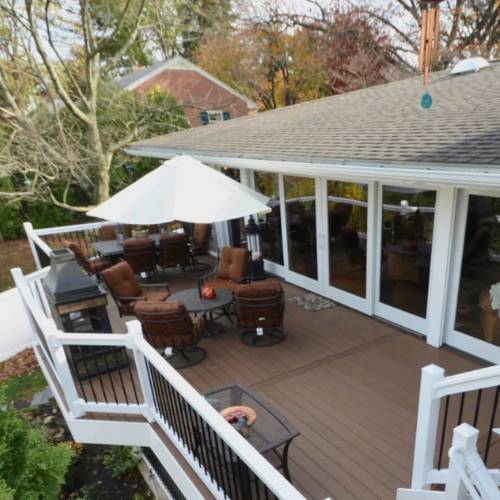
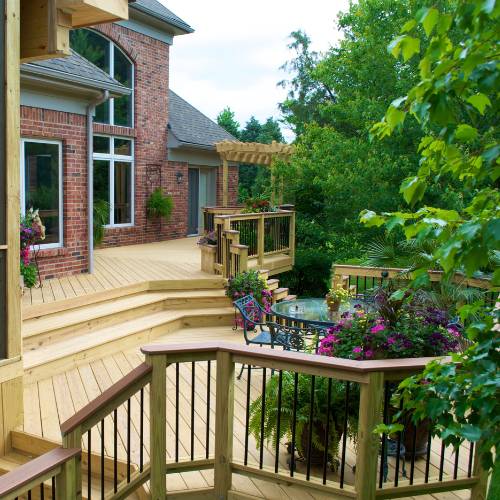
Olathe KS Permits and Regulations for Custom Deck Building
The City of Olathe Building Safety Division requires a building permit before any deck construction begins. There are no exceptions. A deck built without a permit is not a legal structure. Code enforcement can issue a mandatory tear-down order on discovery - and that cost falls entirely on the homeowner. Koch Construction pulls the permit. You do not manage paperwork.
The permit application requires a framing plan, footing depth, ledger attachment detail and load calculations. All of that is submitted before a single board is cut. Many Olathe subdivisions also carry HOA rules that restrict how close a deck may sit to a property line. Setback violations trigger mandatory removal at the homeowner's cost plus HOA fines. We verify both city setback minimums and HOA rules before permit submission. Clients are not surprised by a rejected plan after construction starts.
The inspection sequence has three stages. A footing inspection is completed before concrete is poured. A framing inspection is completed before decking is installed. A final inspection is completed before the structure is occupied. Every stage is built to pass on the first review - no re-inspections from missed structural requirements.
Olathe KS Soil and Weather Conditions for Deck Performance
Olathe sits on expansive clay soil. This is the same shrink-swell soil that causes heaving patios and cracking slabs across Johnson County. Every footing design accounts for this movement before the first hole is dug. Concrete used in deck footings is specified at 4,000 PSI air-entrained mix with 5 to 7 percent air content. That mix resists cracking and spalling through repeated freeze-thaw cycles.
Composite decking installed without correct board gapping buckles in Olathe summer heat. Manufacturers require specific gap tolerances to allow for thermal expansion. Those tolerances are specified in writing before installation begins - not adjusted on the fly by the crew. All joist hanger hardware, lag bolts and post base connectors are hot-dip galvanized or stainless steel rated. Standard zinc-plated hardware corrodes within three years in an outdoor Kansas environment.
Screened systems and covered deck rooflines in the KC metro are built to handle high wind events. Ledger and roof-to-ledger connections use lag bolt pull-out values per AWC Table M9.2-1 to resist uplift. These are not optional calculations. Wind load engineering is part of every covered structure we build in this area.
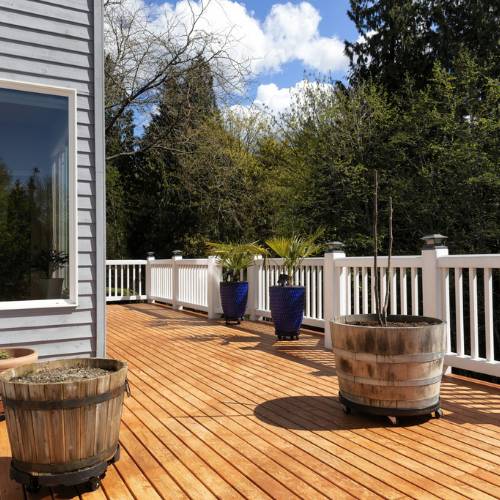
Planning Your Custom Deck Build Timeline in Olathe KS
A standard custom deck build in Olathe runs from permit approval to final inspection in 2 to 4 weeks depending on scope. Permit review at the City of Olathe Building Safety Division adds 1 to 2 weeks before construction starts. That timeline must be factored in from day one. Composite decking systems and specialty post hardware require ordering before permit approval. Lead times for premium composite brands can run 2 to 3 weeks on their own.
Before the crew arrives, homeowners have a short preparation checklist. Call 811 to complete a utility locate before any digging begins. Clear a 10-foot work perimeter around the build zone. Confirm gate access for material delivery and mark any underground irrigation lines. These steps prevent delays on day one and protect utilities below grade.
Scope changes after permit submission extend the timeline. A written change order is required for every modification that alters the permitted drawings. No verbal adjustments are made on site. If you are deciding between repair and replacement on an existing deck, request a structural inspection first. Signs that replacement is the correct call include post rot below grade, ledger separation from the house rim board and joist end decay that has reduced structural depth by more than 20 percent.
Our Full Deck & Outdoor Living Olathe KS Services
Custom deck building is one part of a broader Deck & Outdoor Living specialty. The same crew that builds your deck frame also plans screened-in porches, covered deck rooflines, outdoor kitchens and concrete patio pours. A standalone deck is often the first phase of a full outdoor living build. Planning your deck framing now with a future covered porch or outdoor kitchen in mind prevents costly structural modifications later.
Olathe homeowners working through a full outdoor living project benefit from one contractor managing all phases. Single-source accountability eliminates subcontractor handoff failures. There is no gap between who built the deck and who is adding the roof structure. One crew, one scope and one point of contact from start to finish.
Deck & Outdoor Living Olathe KS
Frequently Asked Questions
Does Olathe KS require a permit before breaking ground on a custom deck build?
Yes. The City of Olathe Building Safety Division requires a permit before any deck construction begins. The application requires framing plans and footing specs. Work started without a permit can be ordered removed by code enforcement. Koch Construction pulls the permit - homeowners do not manage permit paperwork.
How does Johnson County's freeze-thaw cycle affect footing depth requirements for deck posts?
Johnson County frost maps require a minimum footing depth of 36 inches. That places concrete below the active freeze line. Footings poured above this depth heave in late winter. Post bases shift, boards gap and structural alignment is compromised. Olathe's clay soil amplifies this risk because it absorbs moisture and expands more aggressively than sandy or loam soil types.
What load-bearing standards should a custom deck meet to support furniture and gatherings safely?
A residential deck is engineered to carry a minimum live load of 40 PSF per IRC Table R507.5. That covers full occupancy with furniture and gatherings. The ledger board connection to the house rim is the highest-stress point. Lag bolt spacing and pull-out values must be calculated - not estimated. Joist hanger hardware is selected by species-specific bearing values per ICC ESR documentation. Generic hardware from a big-box store does not meet this standard.
Are there HOA setback rules in Olathe that limit how close a deck can sit to a property line?
Many Olathe subdivisions carry HOA rules that set minimum setback distances for decks. These vary by neighborhood and are separate from city zoning setbacks. Building without HOA approval triggers mandatory removal orders and fines. The homeowner bears the full cost. Koch Construction reviews both city setback minimums and the homeowner's HOA CC&Rs before permit submission to prevent a rejected plan.
How can a homeowner tell if an existing deck needs to be replaced rather than repaired?
Replacement is the correct call when post bases show rot below grade, the ledger has separated from the rim board or joist ends have lost structural depth from decay. A surface-level board replacement hides structural failures underneath. The correct first step is a structural inspection of posts, joists and ledger before any cost decision is made. A deck with compromised ledger attachment or rotted posts carries collapse risk under full occupancy load. A repair quote on a structurally failed deck is not a safe option.
What questions should you ask a custom deck builder before signing a contract?
Ask who pulls the permit, what load calculation method is used for the ledger and what hardware spec is used for joist hangers. These three questions immediately separate technical builders from price-only contractors. A fixed-price bid with a line-item scope is the minimum contract standard. Open-ended estimates with hourly labor clauses expose homeowners to unlimited cost overruns. Proof of licensing, bonding and insurance must be provided before any contract is signed - not after the deposit clears.

Call or contact Koch Construction & Remodeling now for a free estimate and quick, reliable service.
Small enough to listen, Big enough to deliver


Powered By Local Biz Domination