
Basement Finishing Contractor Olathe KS
In Olathe, KS, homeowners are turning unfinished basements into real, livable square footage. From newer builds near Blackbob Road to established neighborhoods around Downtown Olathe, the work is happening now. This page is written for the homeowner ready to hire a local contractor - not someone still weighing options for next year.
Basement finishing in Olathe requires specific local knowledge. The City of Olathe runs its own permit process through the Planning and Development office. Johnson County codes govern ceiling height, egress windows, electrical, and smoke detection. Olathe's clay-heavy soil also shapes how foundation walls must be framed and protected before any finish work begins.
Basement finishing is a core specialty within our Basement Services scope of work. A finished basement is only as good as the prep work beneath it. That means permits pulled correctly, inspections passed, and moisture managed from the foundation out.

Basement Finishing Contractor Process in Olathe KS
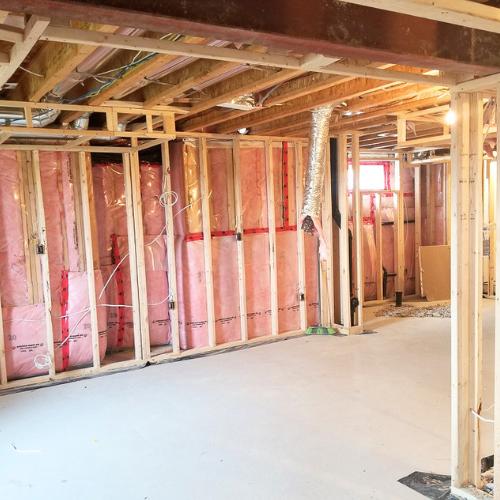
Every basement finishing project in Olathe starts with an in-home assessment. The contractor measures ceiling height, checks for moisture, and evaluates the current slab condition. Before any framing begins, a permit must be pulled through the Olathe City Planning and Development office. No permit means no legal finished space - period.
Framing comes next, and Olathe's clay-heavy soil makes material selection critical. Clay soil expands and contracts seasonally, pushing moisture against foundation walls year-round. Steel stud framing systems resist moisture wicking better than wood in high-clay subsoil. Rough-in electrical and HVAC follow framing - both require Johnson County inspection before walls are closed.
Insulation, drywall, flooring, and trim complete the interior build-out. A vapor barrier and proper wall standoff from the foundation are non-negotiable in Olathe. Skipping this step leads to moisture problems behind finished walls. If the space includes a bedroom with egress, a Certificate of Occupancy is required before the room is legal.
When to Call a Basement Finishing Contractor in Olathe KS
A basement is finish-ready when the structure is dry, stable, and clear of active problems. Walls should show no efflorescence - that white mineral staining signals moisture is moving through the foundation. No active cracks, no bowing walls, and no history of standing water after heavy rain events. Sump pump cycle rates should be normal for at least two full seasons.
Ceiling height is another hard requirement before finishing begins. Johnson County code sets a 7-foot minimum for habitable finished rooms. Basements in lower Olathe subdivisions near Indian Creek have shown seasonal seepage - those spaces need waterproofing review before any contractor frames a single wall. Johnson County averages significant spring rainfall, and a basement that showed seepage in March or April is not finish-ready.
If any warning signs are present, waterproofing or foundation repair comes first. Finishing over an unresolved moisture problem creates a liability, not an asset. A qualified local contractor will identify these issues during the initial assessment and recommend the right sequence of work.
Olathe Regulations for Basement Finishing
No basement finishing project in Olathe is legal without a permit. The City of Olathe Planning and Development Department handles all residential finishing permits. Standard review takes 1 to 3 weeks depending on submission completeness. A licensed contractor pulls the permit - not the homeowner - in most cases.
Any basement bedroom requires an egress window meeting Johnson County minimum dimensions. The net clear opening must be at least 5.7 square feet. Minimum height is 24 inches, minimum width is 20 inches, and the sill must sit no higher than 44 inches from the finished floor. Olathe's expanding clay soil can shift window wells over time, so proper drainage around each egress well is both a code requirement and a practical necessity.
Habitable rooms require a minimum 7-foot finished ceiling height. Hallways and bathrooms carry a 6-foot 8-inch minimum. Smoke and CO detectors must be placed per Olathe fire code. GFCI outlets are required within 6 feet of any water source, and any electrical sub-panel addition must be permitted and inspected separately.
Choosing the Right Basement Finishing Contractor for Olathe Weather and Soil
A local contractor brings direct knowledge of Johnson County's permit process, inspection contacts, and Olathe soil behavior. A national franchise does not. That difference shows up in framing choices, material selection, and how smoothly inspections move. Local experience is not a soft advantage - it is a structural one.
Olathe's high clay content subsoil makes framing material selection a technical decision. Steel stud systems resist moisture wicking from foundation walls better than wood framing in clay-heavy ground. Closed-cell spray foam outperforms fiberglass batts on foundation walls - particularly in parts of eastern Olathe with higher water table exposure. For flooring, luxury vinyl plank handles Olathe's humidity swings better than hardwood in below-grade spaces.
Kansas City metro humidity peaks from June through August. Vapor management systems must account for that seasonal moisture load - not just winter conditions. A contractor who selects materials based only on cold-weather performance will leave a basement vulnerable during summer. The right contractor sizes insulation, vapor barriers, and ventilation for the full annual cycle.

Basement Finishing vs. Full Basement Remodel in Olathe KS
Finishing and remodeling are two different scopes of work. Finishing converts an unfinished basement into livable space for the first time - framing, electrical, insulation, drywall, and flooring built from a raw shell. A remodel takes an existing finished basement and redesigns, updates, or expands it. The starting point determines the budget, timeline, and permit requirements.
Many Olathe homeowners finish first, then return years later for a remodel. Growing families add a bedroom. Remote work demand creates a need for a dedicated home office. Multigenerational living pushes a remodel to add a kitchenette or private bathroom. A contractor who handled the original finish work carries forward knowledge of the framing, electrical panel capacity, and HVAC layout - that history matters on a remodel.
Budget ranges differ significantly between the two scopes. A first-time finishing project covers structural and mechanical work that a remodel may not need to revisit. A remodel may require demo, rerouting existing systems, and bringing older work up to current Johnson County code. A full basement addition - expanding footprint or adding egress - sits in a separate category with its own permit and engineering requirements.
How Long Does It Take to Finish a Basement in Olathe, KS?
Most basement finishing projects in Olathe, KS take 4 to 8 weeks from permit approval to final inspection. Timeline depends on basement size, scope of work, and permit processing time through the Olathe City Planning and Development office.
Permit approval: 1-3 weeks (standard review)
Framing, rough-in electrical and HVAC: 1-2 weeks
Drywall, insulation and flooring: 1-2 weeks
Trim, paint and final inspection: 1 week
Variables that extend the timeline include egress window installation, HVAC rerouting and any inspection hold that requires corrections before the next phase begins.
Our Full Custom Home Building Olathe KS Services
Basement finishing does not exist in isolation. It is one specialized service within a full range of Basement Services solutions. A finished basement that skips waterproofing, egress compliance, or foundation assessment is a liability. Finishing is the final step - the work that comes before it determines whether that finish holds.
The full Basement Services scope covers waterproofing, foundation repair, egress window installation, finishing, and remodeling. Each service connects to the next. A contractor who handles only finish work has no line of sight into what the foundation needed first. The right starting point is a complete assessment - not a drywall quote.
Frequently Asked Questions
How long does it take to finish a basement in Olathe, KS?
Most projects run 4 to 8 weeks from permit approval to final inspection. Permit review alone takes 1 to 3 weeks through the Olathe City Planning and Development office. Egress window installation or HVAC rerouting can extend that timeline further.
How quickly can I get a basement finishing permit approved in Olathe?
Standard permit review through the Olathe City Planning and Development office takes 1 to 3 weeks. Submission completeness drives that timeline - missing documents or incomplete plans trigger delays. A licensed contractor pulls the permit and submits the required documentation. Homeowner-pulled permits are allowed but carry more risk of delays and inspection complications.
What are the egress window requirements for a finished basement in Johnson County?
Any basement bedroom must have an egress window with at least 5.7 square feet of net clear opening. Minimum height is 24 inches. Minimum width is 20 inches. The window sill must sit no higher than 44 inches from the finished floor. Window well drainage is also required - Olathe's clay soil can shift wells and block water runoff.
Does Olathe's clay soil affect how a basement is framed and waterproofed?
Yes - Olathe's expansive clay soil increases moisture pressure against foundation walls year-round. That pressure is highest in spring when soil is saturated from seasonal rainfall. Steel stud framing and a proper vapor barrier with wall standoff are the correct response to that condition. Skipping those steps creates moisture problems behind finished walls within a few seasons.
What warning signs mean I should waterproof before starting a basement renovation?
Active cracks, white mineral staining, musty odor, and any history of water intrusion all require waterproofing review first. Bowing walls mean foundation repair comes before anything else. High sump pump cycle rates signal a drainage problem that finishing will not fix. Covering these conditions with drywall turns a structural problem into a hidden one.
How do I know if my basement ceiling height meets the legal minimum in Olathe, KS?
Measure from the finished floor surface to the finished ceiling - 7 feet is the minimum for habitable rooms under Johnson County code. Measure to the bottom of floor joists if drywall is not yet installed, then account for ceiling finish thickness. If height falls short, drop ceiling systems and beam-wrapping options may be limited. A contractor can walk through variance options if the space does not clear the minimum.

Call or contact Koch Construction & Remodeling now for a free estimate and quick, reliable service.
Small enough to listen, Big enough to deliver


Powered By Local Biz Domination